
A continuous walk
The OldestLight
42
Light left a sky that could not be seen through. It is still arriving. The figures below are the ones the rest of the walk has to answer for.
The figures
Six numbers the walk keeps
42
a divisor
In a textbook estimate of when hydrogen would form.
42.7
million light-years
How large the region we now observe was, when that light left.
380,000
years
ESA's public figure for when the universe became transparent.
42
years old
Max Planck's age on the December day he accounted for a furnace spectrum.
42
years old
Niels Bohr during the October 1927 Solvay meeting.
1.616
× 10⁻³⁵ metres
The Planck length, rounded from the 2022 CODATA value.
Where the light is stuck
A sky that could not send a message
Imagine fog so thick that a lamp on the next hill never arrives. The early universe was that kind of place, and it was everywhere. The matter was a plasma. Electrons were free. A photon, a grain of light, scattered off them before it could cross any distance you would call a view.
There was no night sky, and no clear air in which a star could have been seen. This is the first few hundred thousand years, before any star. The cosmos glowed and hid itself at the same time.
A signal that never arrives cannot tell a neighbor anything. The oldest light is the first grain that got out. The figure this walk takes next is an earlier moment, when hydrogen is only halfway back together. A textbook prints that estimate with a 42.
Sources and notes
The plasma before last scattering, and the short mean free path of photons, is standard cosmology. A clear textbook account is Barbara Ryden, Introduction to Cosmology, 2nd ed. (Cambridge: Cambridge University Press, 2017), chapter 8. The European Space Agency's public account of the Planck mission describes the cosmic microwave background as the picture preserved from when the universe became transparent. European Space Agency, "Planck science highlights," accessed 25 September 2026.
A half-ionized estimate
The divisor 42
kT ≈ Q / 42Q = 13.6 eV, so Q/42 ≈ 0.324 eV, about 3,760 K
The fog thins when electrons settle and stop throwing the light back. The temperature where hydrogen is halfway settled is the estimate with the 42 in it.
Hydrogen holds its electron with a binding energy of 13.6 electron-volts. Set that energy equal to a typical photon and the temperature comes out near 60,000 kelvin. The glow of a hot body has a thin, energetic tail. Those few photons keep knocking electrons loose long after a typical photon has given up.
Meghnad Saha's equation, written for stellar atmospheres and later used for the cosmos, counts that tail. Ryden defines a recombination temperature as the moment when half the hydrogen is still ionized. With a baryon-to-photon ratio near six parts in ten billion, the second edition of her textbook gives
kTrec = 0.324 eV = Q/42,
about 3,760 kelvin, redshift about 1,380, and, in her benchmark model, an age near 250,000 years. The first edition is almost the same line: 0.323 eV = Q/42. The exponential is so steep that the exact matter-to-light ratio barely moves the temperature. The 42 is the approximate divisor that falls out of that estimate.
Photon decoupling is a different question. It asks when the fog is thin enough that a typical photon stops scattering and streams. That sky is cooler, near 3,000 kelvin, at a redshift near 1,090. The Saha half-ionized moment is earlier and hotter than the surface we actually see.
Sources and notes
Barbara Ryden, Introduction to Cosmology, 2nd ed. (Cambridge: Cambridge University Press, 2017), chapter 8. A chapter digest records equation 8.37: kTrec = 0.324 eV = Q/42, Trec = 3,760 K, zrec = 1,380, trec = 250,000 yr for X = 1/2 and η = 6.1 × 10⁻¹⁰. The same digest records the failed 2.7kT = Q estimate near 60,000 K as equation 8.19. Accessed through a public revision note, 25 September 2026.
First edition excerpt: Barbara Ryden, Introduction to Cosmology (San Francisco: Addison-Wesley, 2003), recombination defined at X = 1/2 with η = 5.5 × 10⁻¹⁰, giving kTrec = 0.323 eV = Q/42 and Trec = 3,740 K. The same excerpt separates a later decoupling redshift, rounded near 1,100, temperature near 3,000 K.
13.6 / 42 = 0.3238 eV. Ryden's 0.324 eV is that quotient rounded. This page did not hold the printed book. The equation is used because two editions state it, not because a nearby number was searched for.
Scale the region back
42.7 million light-years
42.7
million light-years, then
46.5 billion / 1,090 = 42.66 millionRounded with the inputs: 42.7 million light-years
When the fog was finally thin enough for light to leave, the public age from ESA is about 380,000 years. That later moment is last scattering. Today the observable universe has a radius of about 46.5 billion light-years. Space stretched during the trip, so the edge sits farther out than 13.8 billion years of flight. The number is a present-day proper distance to what can have reached us.
At last scattering the scale of the universe was about 1/1,090 of what it is now. The same region, then, had a physical radius of about 46.5 billion divided by 1,090. That quotient is 42,660,550 light-years. To the precision of the round inputs, 42.7 million light-years.
That is the size of the region we can observe, back when the oldest light left. The horizon then was smaller. A rough matter-dominated estimate of how far light could already have traveled is about three times the age: 3 × 380,000 years is about 1.1 million light-years. The real integral through radiation and matter moves the figure. The horizon stays near a million light-years.
So the patch that became everything we can see was many causal neighborhoods across. Those neighborhoods agree, to about one part in a hundred thousand, on a temperature. That agreement is the horizon problem. Inflation is one proposed early stretch that would let them have been in contact. The 42.7 is the size of the patch. It does not decide the proposal.
Sources and notes
Radius today: "Observable universe," Wikipedia, accessed 25 September 2026. The page gives about 46.5 billion light-years as the estimated radius, and about 45.7 billion light-years as the comoving distance to the cosmic microwave background. Both are model-dependent. This walk uses 46.5 billion because the founding arithmetic asked for that public round number.
Scale factor: redshift of last scattering z* ≈ 1,089.9, so 1 + z ≈ 1,090. Planck Collaboration, "Planck 2018 results. VI. Cosmological parameters," Astronomy & Astrophysics 641, A6 (2020). Table values cluster near z* = 1,089.92 ± 0.25 for the combined likelihood.
Quotient: 46.5 × 10⁹ / 1,090 = 4.266055 × 10⁷ light-years. Three-significant-figure rounding of 46.5 and 1,090 yields 42.7 million. If the distance used is the 45.7 billion light-years to the last-scattering surface rather than 46.5, the same division gives about 41.9 million. The headline follows the instructed 46.5.
Causal contrast: in a flat, matter-dominated universe the particle horizon is about 3ct. At 380,000 years, 3ct ≈ 1.14 million light-years. This is a teaching estimate, not a Planck data product. The horizon problem is set out in Ryden, Introduction to Cosmology, 2nd ed., chapter 10, and in "Horizon problem," Wikipedia, accessed 25 September 2026.
The light that got out
380,000
years, in ESA's public telling
When the universe could be seen through
Neutral hydrogen forms. Free electrons grow scarce. Photons stop bouncing and travel. That release is the cosmic microwave background. The picture of it comes from Planck, the European Space Agency's satellite. The light has been stretched by the expansion ever since. It arrives now as a cold microwave bath, about 2.725 kelvin, almost the same in every direction.
Temperature scales with 1 + z. At redshift 1,090, a present temperature of 2.725 kelvin was about 2,970 kelvin. A glowing sky of that temperature would look deep orange. Nothing with an eye was there. The first stars come much later.
ESA's account of Planck says this picture is from about 380,000 years after the Big Bang, and that the mission's map was made by instruments that could tell millionths of a degree apart. The 2013 public recipe was about 4.9 percent ordinary matter, 26.8 percent dark matter, and 68.3 percent dark energy, with an age of 13.8 billion years. Later Planck analyses move those shares slightly. The age stays 13.8 billion years at the precision of that sentence.
The map gives densities, a flatness, a spectral tilt, and a very small anisotropy. The glow is a spectrum, the same kind a furnace gives in a laboratory. Counting that spectrum, in elements, is Berlin in December 1900.
Sources and notes
European Space Agency, "Planck science highlights," accessed 25 September 2026. The page states the 380,000-year figure, the 13.8-billion-year age, and the 4.9 / 26.8 / 68.3 public recipe from the mission's highlighted results.
D. J. Fixsen, "The Temperature of the Cosmic Microwave Background," The Astrophysical Journal 707 (2009): 916–920, T = 2.72548 ± 0.00057 K. Then 2.725 × 1,090 ≈ 2,970 K. Planck Collaboration, "Planck 2018 results. VI," Astronomy & Astrophysics 641, A6 (2020), for z* near 1,089.9 and an age near 13.8 Gyr.
Berlin, 14 December 1900
Planck at 42
Max Planck was born in Kiel on 23 April 1858. On 14 December 1900 he stood before the German Physical Society in Berlin and accounted for the spectrum of a perfectly absorbing body. To make the formula work he treated the energy of the resonators as elements, ε = hν. h is the constant that now carries his name. In the present SI, h is defined as 6.62607015 × 10⁻³⁴ joule-seconds.
He was 42. April 1858 to April 1900 is 42 years, and December falls after the birthday.
The usual telling jumps to particles of light. What he did that day was break the smooth exchange of energy for the oscillators in the wall of the cavity. Einstein, in 1905, treats light itself as quanta, in the paper on the photoelectric effect. The sky and the cavity meet in the question of what light is when it is counted. Once it is counted, a further question opens: whether one arrangement of an experiment can show both the wave and the grain.
Sources and notes
Birth: 23 April 1858, Kiel. The 14 December 1900 presentation to the Deutsche Physikalische Gesellschaft is the ordinary historical date of the quantum hypothesis, recorded for example by the MacTutor chronology, "14th December," accessed 25 September 2026. The published lecture is Max Planck, "Zur Theorie des Gesetzes der Energieverteilung im Normalspectrum," Verhandlungen der Deutschen Physikalischen Gesellschaft 2 (1900): 237–245, followed by the paper in Annalen der Physik 4 (1901): 553–563.
h is exact in the 2019 SI. CODATA records it as a defining constant. Einstein's light-quantum paper is "Über einen die Erzeugung und Verwandlung des Lichtes betreffenden heuristischen Gesichtspunkt," Annalen der Physik 17 (1905): 132–148.
Age: 1900 − 1858 = 42, and 14 December is after 23 April.
Como in September, Brussels in October
Bohr at Solvay
A quantum event will not sit for every portrait at once. Niels Bohr's complementarity keeps both, wave and grain, and refuses the claim that one arrangement can show both. He set that out at the Volta conference in Como on 16 September 1927, in a lecture later titled "The Quantum Postulate and the Recent Development of Atomic Theory."
Einstein was not at Como. The argument people mean by the debates between Einstein and Bohr has its famous early room at the fifth Solvay Conference, on electrons and photons, in Brussels, 24 to 29 October 1927. Bohr repeated the complementarity lecture there. Einstein pressed on what the wave function was saying about a single real event.
Bohr was born in Copenhagen on 7 October 1885. On 16 September 1927 he was 41. On 24 October he had turned 42. The age belongs to Solvay. What a single quantum event is remained an open argument after that week. Sharing an age with Planck does not finish it. The length that can be built from Planck's constant is a different question, and some readers have tried to make that length a pixel.
Sources and notes
Birth: Nobel Prize biographical note, Niels Bohr, born Copenhagen, 7 October 1885, accessed 25 September 2026.
Como: International Congress of Physicists, 11 to 27 September 1927. Bohr's lecture on 16 September introduced complementarity. "Como Conference," Wikipedia, accessed 25 September 2026. Einstein did not attend. The lecture was repeated at Solvay.
Fifth Solvay Conference, Brussels, 24–29 October 1927, topic electrons and photons. The distinction between the September lecture and the October arguments is summarized in Olival Freire Jr. and others' historical discussions of the Bohr–Einstein exchange, and in the Como Conference article cited above.
Ages: 16 September 1927 is before the birthday, so 41. 24 October 1927 is after 7 October, so 42.
A combination of constants
The Planck length
From the h of that Berlin cavity, take the strength of gravity and the speed of light. Arrange them so the result is a length.
ℓP = √(ℏ G / c³)CODATA 2022: 1.616255(18) × 10⁻³⁵ m
1.616 × 10⁻³⁵
metres, rounded
The public figure 1.616 × 10⁻³⁵ metres is that value rounded. It is a characteristic scale built from ℏ, G, and c, where a quantum description and a gravitational description are both expected to matter. It has not been established, by any instrument, as a pixel or as a minimum length of spacetime. Accelerators stop many orders short. Sixteen orders of magnitude still sit between a laboratory probe and this length.
Some people, Elon Musk among them, read the length as the pixel of reality, or the voxel of a simulation. That reading sits on top of a derived scale. The uncertainty principle limits how sharply position and momentum can be known together, and it has been tested. A cube of space is a further claim. Arguments that a tighter localization would collapse into a black hole belong to quantum gravity, which is not yet a finished theory.
Sources and notes
NIST, "CODATA Value: Planck length," 2022 adjustment, 1.616255(18) × 10−35 m, accessed 25 September 2026. Peter Mohr, David Newell, Barry Taylor, and Eite Tiesinga, "CODATA Recommended Values of the Fundamental Physical Constants: 2022," arXiv:2409.03787.
The rounded hero figure 1.616 × 10⁻³⁵ m keeps three digits after the point so it can be read at a glance. The note keeps the uncertainty.
What can be read, and what a reading disturbs
Bits, qubits, and a question Musk keeps asking
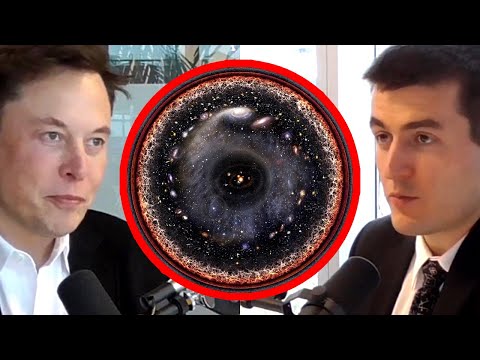
"What's outside the simulation?"
He asked that of a future machine. The posts below are where he treats the Planck length as the voxel of a simulation.
"A Planck cube is the voxel size of the simulation."
On 15 March 2024 he wrote that below the Planck length, which he called the smallest measurable distance, further digits of pi have no practical purpose, and that pi can be thought of as an integer of about 66 digits describing the number of voxels in this reality or simulation. On 8 February 2023 the shorter line was already there: "Voxel size of the simulation."
These are his sentences. They join a longer public argument, including the remark reported from the Code Conference on 1 June 2016, that the chance we are in base reality is one in billions if simulations become indistinguishable from lived life. The Verge reported that stage. The sentence is about odds.
A classical bit is a distinction that has already landed: 0 or 1, this or that. A qubit is the state before that landing. It takes two amplitudes. A measurement returns one bit and changes what can be said next. Holevo's bound puts the limit plainly: n qubits yield at most n classical bits of accessible information.
A spinning coin is the picture people reach for. The coin still has a face while it turns. A qubit is not hiding a classical face in that way. The picture is the unfinished distinction. The vector is the physics.
John Wheeler's phrase "it from bit" proposes that the physical world is answerable to yes-or-no questions. He offered it in 1990 as a search, not as a finding from the sky.
In December 2024 the Google Quantum AI collaboration reported, in Nature, that on their Willow processor a larger code, 101 qubits at distance 7, had a lower logical error than a smaller one. Making the code bigger helped. The report is about protecting information on a chip. The microwave sky is a different measurement.
The oldest light is a record: a faint temperature map across a region once about 42.7 million light-years across, wider than any signal could then have crossed. Information was preserved. What kind, and whether a further outside is a coherent question, stays open. Musk's question to an AGI leaves that opening in one particular way.
Sources and notes
Lex Fridman, "Elon Musk: What's Outside the Simulation?," YouTube, 16 August 2019. The audible answer in the clip is "What's outside the simulation?"
https://x.com/elonmusk/status/1623190177991561219
https://x.com/elonmusk/status/1768538524242833525
https://x.com/elonmusk/status/1985103829713797475
Josh Topolsky, "Odds Are We're Living in a Simulation, Says Elon Musk," The Verge, 2 June 2016. The billion-to-one line is a reported quotation from that stage, not from the Lex clip.
Google Quantum AI and Collaborators, "Quantum error correction below the surface code threshold," Nature 638 (2025): 920–926, published online 9 December 2024. Willow, distance-7 code, Λ = 2.14 ± 0.02.
John Archibald Wheeler, "Information, Physics, Quantum: The Search for Links," in Complexity, Entropy, and the Physics of Information, ed. Wojciech H. Zurek (Redwood City, CA: Addison-Wesley, 1990). Philosophical proposal. Alexander Holevo's bound (1973) limits accessible classical information from a quantum state.
Three traditions
How a beginning has been told
The map leaves the outside unstated, and so does the question put to a future machine. These three traditions answer a beginning of light in their own words. They stand beside the measurements.
Scripture
"And God said, Let there be light: and there was light."
The sentence is Genesis 1:3 in the King James Version, an English translation published in 1611. The Hebrew composition is much older. This walk is written from a Christian regard for that sentence. Light is spoken. The speaking is not a side effect of a hotter equation. Genesis remains one witness, and it stays itself.
A story about the last question
In November 1956 Isaac Asimov published "The Last Question," a work of fiction, in Science Fiction Quarterly. Across a vast future, people ask a computer whether the running-down of the universe, entropy, can be reversed. The machine has no answer for a very long time. When an answer finally comes, the story returns to the words of a creation: let there be light. The ending stands beside a sky that once could not shine freely, and then did.
Prajāpati, taken apart and restored
In the Śatapatha Brāhmaṇa, a Vedic ritual manual, Julius Eggeling's English of 1894 gives Prajāpati as the lord of creatures, identified with the fire altar and with the year. The rite of piling the altar is told as a restoration. The one who came apart is built up again in brick, metre, and season.
In the fire-altar books Eggeling records twenty-one kindling verses: twelve months, five seasons, three worlds, and yonder sun. That, the text says, is the twenty-onefold Prajāpati. The next account is a person: ten fingers, ten toes, and the body, also twenty-one. Cosmos and body are set beside each other as the same measure of Agni.
Two twenty-ones sit side by side in the rite. A reader may add them and arrive at 42. The priests were writing a restoration: a world put back by a careful act. The sum is our notice. What can be checked, across the whole walk, is shorter than that notice.
Sources and notes
Genesis 1:3, King James Version, the 1611 English translation of a much older Hebrew text. The Christian regard is the stance of this walk's making. It is marked as stance, not as a result.
Isaac Asimov, "The Last Question," Science Fiction Quarterly (November 1956). The closing return to the words of creation is described, not reproduced at length.
Julius Eggeling, trans., The Satapatha-Brahmana According to the Text of the Madhyandina School, Part III, Sacred Books of the East, vol. 41 (Oxford: Clarendon Press, 1894). The twenty-one kindling verses (months, seasons, worlds, and the sun) and the twenty-onefold person (ten fingers, ten toes, and the body) appear in the fire-altar discussion of the animal sacrifice within the Agnicayana. A scan page carrying that passage was consulted 25 September 2026 via a public digital text of Part III. The restoration formula, Prajāpati asking to be restored and the altar as that restoration, is Eggeling's governing reading of the Agnicayana, also in his introductions to these volumes.
Scripture, the 1956 story, and the Vedic ritual manual stand in different rooms. None of them is the Saha estimate.
Left as correspondence
Cosmic winks
The measurements, the ages, and the rite can be checked. A wink is a correspondence that survives the check, and then stays a correspondence. Nothing in this list made any other item happen.
- EstimateRyden's Saha line really does print Q/42. The divisor is in the book. It estimates a half-ionized moment, not last scattering.
- Arithmetic46.5 billion divided by 1,090 really is about 42.7 million. Change either input and the headline moves.
- CalendarPlanck was 42 in December 1900. Bohr was 42 at Solvay and 41 at Como. Both ages survive a birthday check.
- RitualThe Brāhmaṇa sets two twenty-ones side by side. The sum, 42, is our notice.
- AbsentThe Planck length, Willow's error rate, and the microwave temperature are here because the story needs them. Their digits are not 42.
Sources and notes
Each line points back to the note in its chapter. A correspondence that cannot be checked stays out.
Works in this walk
Asimov, Isaac. "The Last Question." Science Fiction Quarterly, November 1956.
Eggeling, Julius, trans. The Satapatha-Brahmana. Part III. Sacred Books of the East 41. Oxford: Clarendon Press, 1894.
Einstein, Albert. "Über einen die Erzeugung und Verwandlung des Lichtes betreffenden heuristischen Gesichtspunkt." Annalen der Physik 17 (1905): 132–148.
European Space Agency. "Planck science highlights." Accessed 25 September 2026.
Fixsen, D. J. "The Temperature of the Cosmic Microwave Background." The Astrophysical Journal 707 (2009): 916–920.
Fridman, Lex. "Elon Musk: What's Outside the Simulation?" YouTube, 16 August 2019.
Google Quantum AI and Collaborators. "Quantum error correction below the surface code threshold." Nature 638 (2025): 920–926.
The Holy Bible. King James Version. Genesis 1:3.
Mohr, Peter, David Newell, Barry Taylor, and Eite Tiesinga. "CODATA Recommended Values of the Fundamental Physical Constants: 2022." arXiv:2409.03787.
NIST. "CODATA Value: Planck length." 2022 adjustment. Accessed 25 September 2026.
https://x.com/elonmusk/status/1623190177991561219
https://x.com/elonmusk/status/1768538524242833525
https://x.com/elonmusk/status/1985103829713797475
Planck, Max. "Zur Theorie des Gesetzes der Energieverteilung im Normalspectrum." Verhandlungen der Deutschen Physikalischen Gesellschaft 2 (1900): 237–245.
Planck Collaboration. "Planck 2018 results. VI. Cosmological parameters." Astronomy & Astrophysics 641, A6 (2020).
Ryden, Barbara. Introduction to Cosmology. San Francisco: Addison-Wesley, 2003. 2nd ed., Cambridge: Cambridge University Press, 2017.
Topolsky, Josh. "Odds Are We're Living in a Simulation, Says Elon Musk." The Verge, 2 June 2016.
Wheeler, John Archibald. "Information, Physics, Quantum: The Search for Links." In Complexity, Entropy, and the Physics of Information, edited by Wojciech H. Zurek. Redwood City, CA: Addison-Wesley, 1990.
What remains
What does it mean for the universe to contemplate its own beginning?
The oldest light crossed a history in which, for a long time, nothing could have studied it. Then there were beings who could build a satellite, argue about a constant, and ask whether a length is a pixel.